Answering property inquiries before the lead goes cold
A property listed on three portals produces a burst of inquiries within the first day, nearly all asking the same six things, nearly all going to an agent who is out showing someone else a flat. The lead that gets an answer in ten minutes books a viewing; the one answered tomorrow has already seen two other places.
4 min read
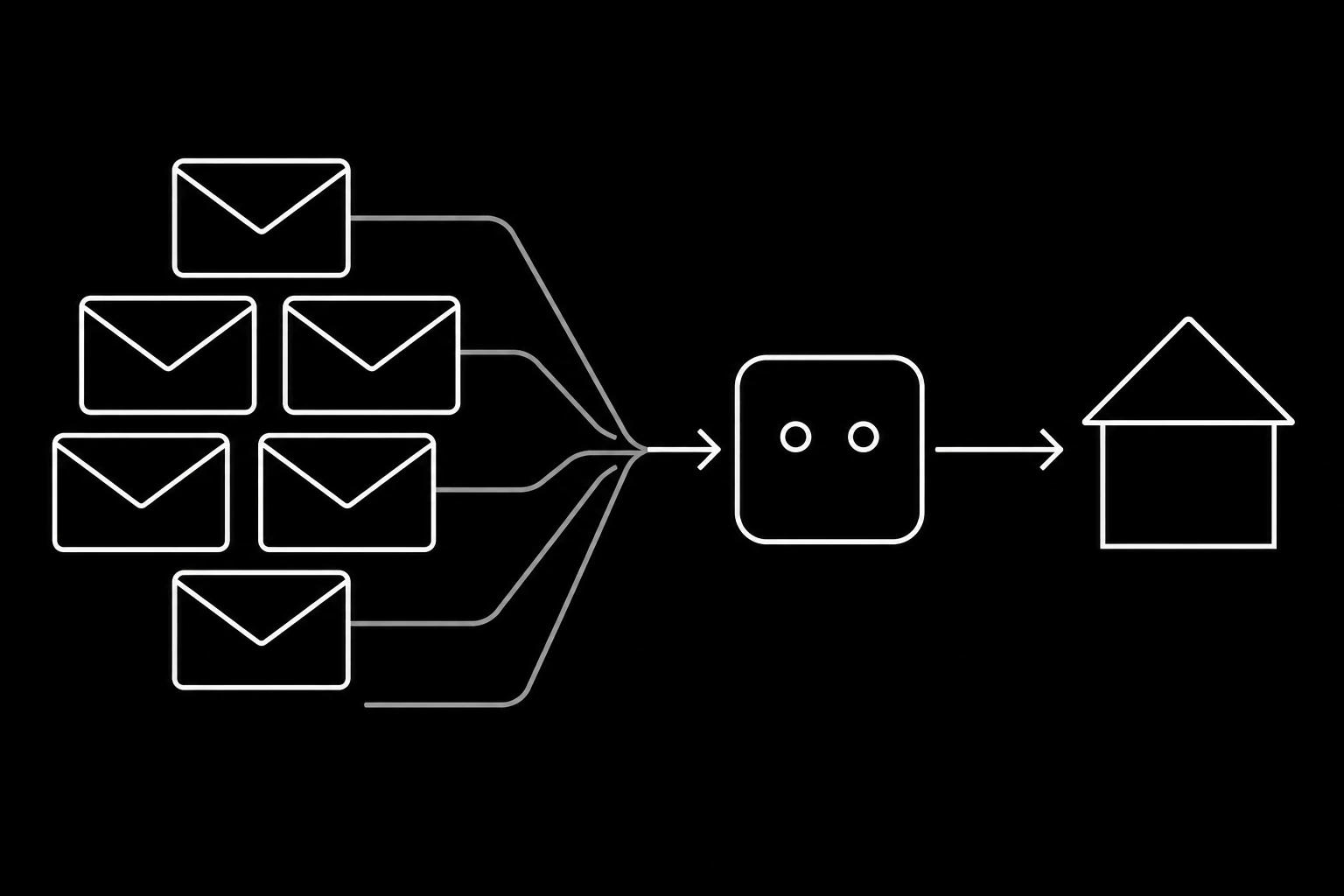
The six questions
Almost every first inquiry is one of these, and all six are answerable from the listing and the calendar.
- Is it still available.
- When can I see it.
- What are the running costs, the service charge, the council tax band.
- Is it chain free, when is completion, when is it available to move in.
- Does it allow pets, sharers, students, smokers.
- What is the parking, the broadband, the transport.
An agent with the listing data and a viewing calendar answers all six correctly and instantly. That is most of the volume, and it is the part a human adds nothing to beyond typing speed.
What has to escalate
The rest is judgement or money, and each one is a conversation a person should own.
| Inquiry | Why a person |
|---|---|
| Offers, or anything about price | Negotiation, and a stray sentence can imply acceptance |
| Chain, mortgage status, proof of funds | Qualification with consequences for the seller |
| Anything about the neighbours or the area's reputation | Discrimination risk, and honest answers need care |
| A complaint about a previous viewing | Relationship repair |
| Anything from a solicitor | Legal process |
The second row deserves emphasis. Fair housing and equality rules mean certain questions cannot be answered by anyone, and an agent that helpfully characterises "the sort of people who live around here" has created a liability in writing. Make that a hard escalation, not a prompt preference, and write the boundary the way the system prompt sets out.
Viewings are the whole job
The measurable outcome is viewings booked, and booking one over email is the scheduling loop: propose two concrete slots from real availability, confirm, and write it back to the calendar. Never offer a slot the calendar has not held, per appointment reminders that can handle the reply.
Two details specific to property. Group viewings and open houses change the shape from proposing slots to allocating places, which is easier, not harder. And a viewing cancelled at short notice should trigger an immediate offer of the freed slot to the next person in the thread, which is the kind of thing nobody has time to do manually and which fills a Saturday.
send_email {
  to: ["buyer@example.com"],
  subject: "Re: 12 Rue Verte, viewing",
  body: "Still available. Two slots this week:\n\n- Thursday 5 Aug, 17:30\n- Saturday 7 Aug, 11:00\n\nReply with one and I will confirm. Service charge is 1,850 a year and it is chain free."
}
Notice the answer to the unasked question at the end. Inquiries usually ask one thing and want three, and pre-empting the obvious follow-up saves a round trip.

Bursts, portals, and where the mail comes from
Portal inquiries arrive from the portal's own address with the buyer's details in the body, which means two things. The agent has to parse the forwarded structure rather than treating the sender as the buyer, and replying to the portal address may or may not reach the person. Handle both: extract the buyer's address where the portal exposes it, and where it does not, reply in the portal's thread and keep the record straight.
Volume is bursty in a way that punishes naive setups: a new listing goes live and thirty inquiries land in an hour. That is the concurrency case from what happens when forty messages arrive at once, and the specific risk here is answering the same person twice because two portal notifications arrived for one inquiry.
Keeping the record where the team can use it
Every inquiry is a contact and most of them will be back for a different property. Recording what they are looking for, their budget band if they volunteered it, and which properties they have already seen turns the second inquiry into a much better conversation, per giving an email agent memory.
That memory is also where the agent earns trust with the human agents, who otherwise experience this as a robot answering their leads. An assistant that hands over a thread with "viewed 12 Rue Verte in June, budget mentioned as around 400" is doing the job of a good junior colleague.
Starting
One listing type, one office, one week of reading every thread. Availability and viewings only, with everything about price escalating from day one. Widen once you have seen what actually arrives, per the first week with an email agent.
Questions
- Can an AI agent handle property inquiries?
- Yes, for the repetitive majority: availability, viewing times, running costs, and the standard details. Price, offers, qualification, and anything about the area's character must escalate to a person.
- What is the biggest win?
- Speed on the first reply, and backfilling viewing slots freed by cancellations. Both are things a busy agent cannot do while showing a property.
- How does it handle portal inquiries?
- By parsing the forwarded structure rather than treating the portal as the buyer, extracting the buyer's address where exposed, and deduplicating when a portal sends more than one notification for the same inquiry.
- What must it never answer?
- Anything characterising the neighbourhood's residents, anything about price or offers, and any qualification question with consequences for the seller. The first is a legal risk in writing.
- Does it book the viewing itself?
- It proposes slots the calendar has actually held, confirms, and writes the booking back. It should never offer a time it cannot hold.
- What does the human agent get?
- A thread with the whole history and a contact record noting what the buyer is looking for and what they have already seen, so a handover reads like a briefed colleague rather than a transcript.
Give your agent an address it can answer from.
Create an inbox