What your team does once the agent handles the easy half
The pitch for an email agent is usually headcount. The reality is more interesting and slightly less comfortable: the volume drops, the difficulty of what remains goes up, and the skills your team needs shift. Planning for that is the difference between a team that gets better and one that quietly gets demoralised.
5 min read
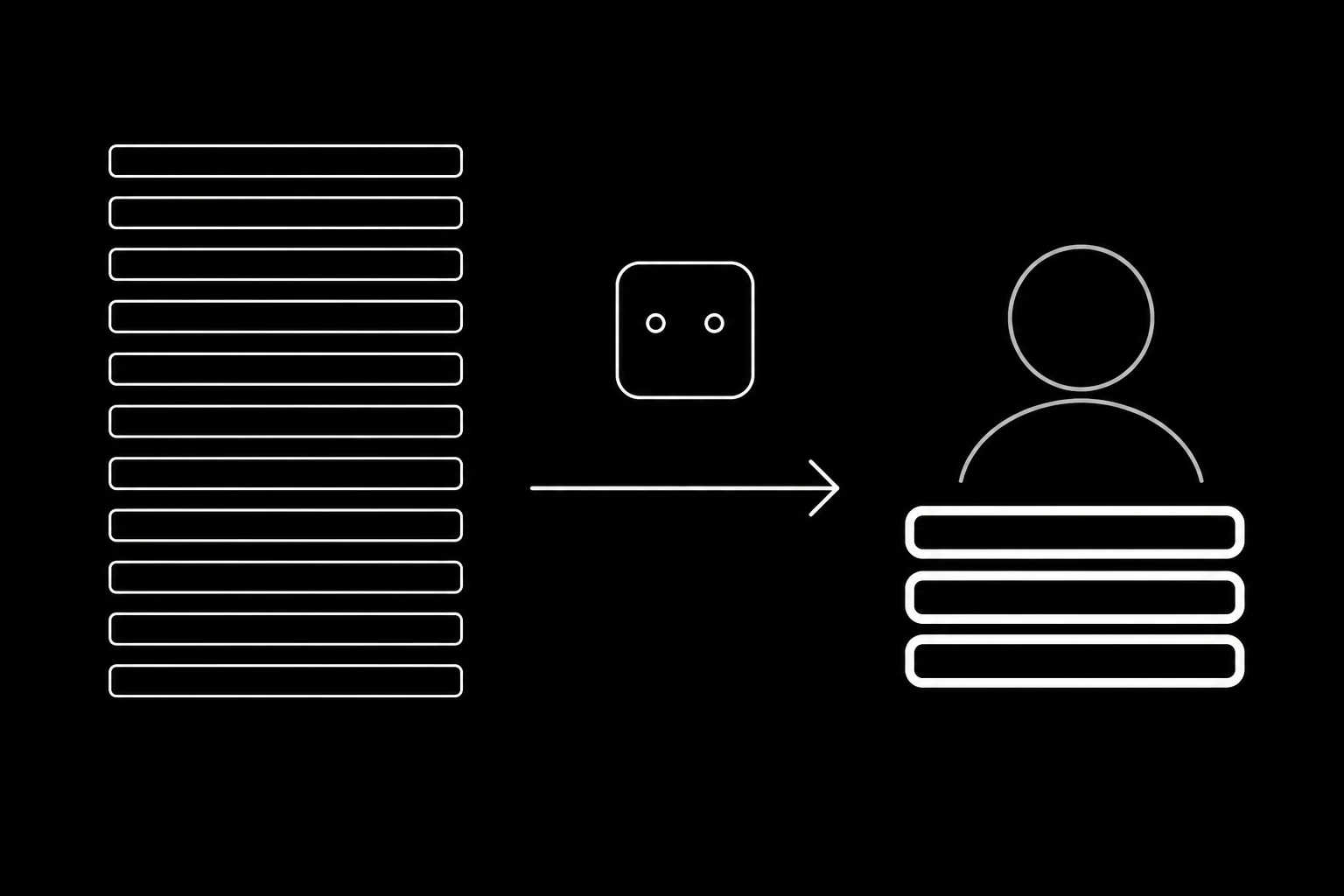
What is left is the hard part
An agent takes the questions with documented answers. What escalates is money, judgement, ambiguity, and unhappy people, which is to say everything that used to be broken up by easy wins.
Two consequences people do not plan for.
Cognitive load per message rises. Forty threads a day, all of them requiring a decision, is more tiring than a hundred where seventy were routine. Expect throughput per person to fall, and do not read that as underperformance.
Junior progression breaks. New people historically learned by answering easy mail. If the agent takes that, you need a deliberate replacement: reviewing agent threads, shadowing escalations, and owning a category end to end. Reviewing is genuinely good training, because reading fifty replies and judging them teaches the shape of the job quickly, and it doubles as the evaluation work described in evaluating an email agent.
The roles that appear
Three jobs come into existence, and they are usually shared rather than full-time at first.
| Role | Does | Time |
|---|---|---|
| Agent owner | Reads a sample weekly, tunes the prompt, decides what it handles next | A few hours a week |
| Escalation handler | The rota that answers what the agent hands over | Existing team, reshaped |
| Reviewer | Grades a sample, maintains the golden threads | Rotates, and is good training |
The agent owner is the role most teams skip, and its absence is why agents drift. It does not need to be a senior person. It needs to be a named one, per the ownership point in the security review questions an email agent should survive.
Staffing to the escalation rate, not the volume
The number that determines headcount stops being total messages and becomes escalations per day, plus the review time. That means your staffing model depends on a metric that moves as the agent improves, which is unfamiliar and manageable if you watch it.
The trap is cutting to the new number immediately. Escalation rates in month one are not the steady state: they fall as the prompt gets tuned and rise whenever you widen the agent's remit. Give it a quarter before you make a permanent decision, and reduce through attrition and reallocation rather than by promising a saving in week two.
Rota design for the leftover pile
Escalations arrive unevenly and each one carries context. Two things make the rota work.
Ownership per thread, not per shift. Whoever picks up an escalation owns it until it closes. Handing a half-finished judgement call to the next shift is how customers end up repeating themselves, and it wastes the context the agent carefully assembled.
Blocks rather than a constant trickle. Two hours of escalations, then time on something else, beats a day of interruptions. The agent absorbs the arrival randomness, which is precisely what makes blocking possible for the first time.
Where the saved time should go
Three places, in order of return.
Improving the answers the agent gives. Every documentation fix reduces the escalation rate permanently, and the reviewer sees exactly which gaps matter because the failures are in front of them.
Handling more categories. The next tranche of mail the agent could take, chosen from evidence rather than ambition, per the first week with an email agent.
The work nobody had time for. Proactive outreach to accounts nobody has contacted, the follow-ups that were always dropped, the documentation everyone knew was wrong.
The third is where the actual business value tends to land, and it never appears in the headcount arithmetic.

Telling the team
Be straight about it. People know when a tool is arriving to reduce a team, and pretending otherwise costs more trust than the honest version costs anything.
The honest version is usually: this handles the repetitive half, your work becomes the harder half, we need the same judgement and less typing, and here is what we will do with the time. If the plan genuinely is to reduce headcount, say that instead, because the alternative is a team that stops flagging the agent's mistakes.
That last point is operational rather than moral. Your quality signal comes from the people reading the threads, and a team that suspects the agent is there to replace them will not tell you when it is wrong.
Questions
- Does an AI email agent reduce headcount?
- It reduces volume and raises the difficulty of what remains, so throughput per person falls. Some teams reduce headcount, most reallocate, and the honest version is to decide which before you start.
- What new roles are needed?
- An agent owner who reads a sample weekly and tunes it, a reviewer who grades threads and maintains the test set, and an escalation rota. The first is small, and skipping it is why agents drift.
- How do juniors learn now?
- By reviewing agent threads, shadowing escalations, and owning a category. Reviewing is unusually good training, since judging fifty replies teaches the shape of the job fast.
- What number should staffing follow?
- Escalations per day plus review time, not total volume. Wait a quarter before making it permanent, since the rate falls with tuning and rises when you widen the remit.
- How should the escalation rota work?
- Ownership per thread until it closes, in blocks rather than a constant trickle. The agent absorbs the randomness of arrival, which is what makes blocking possible.
- What should we tell the team?
- The truth. Your quality signal comes from people reading threads, and a team that thinks the agent is there to replace them stops reporting its mistakes.
Give your agent an address it can answer from.
Create an inbox