Booking enquiries that arrive while the desk is busy
Hospitality email arrives when the front desk is checking someone in. It is repetitive, it decays quickly, and the guest asking whether you have a family room for the last weekend of August will book with someone who answered in ten minutes.
4 min read
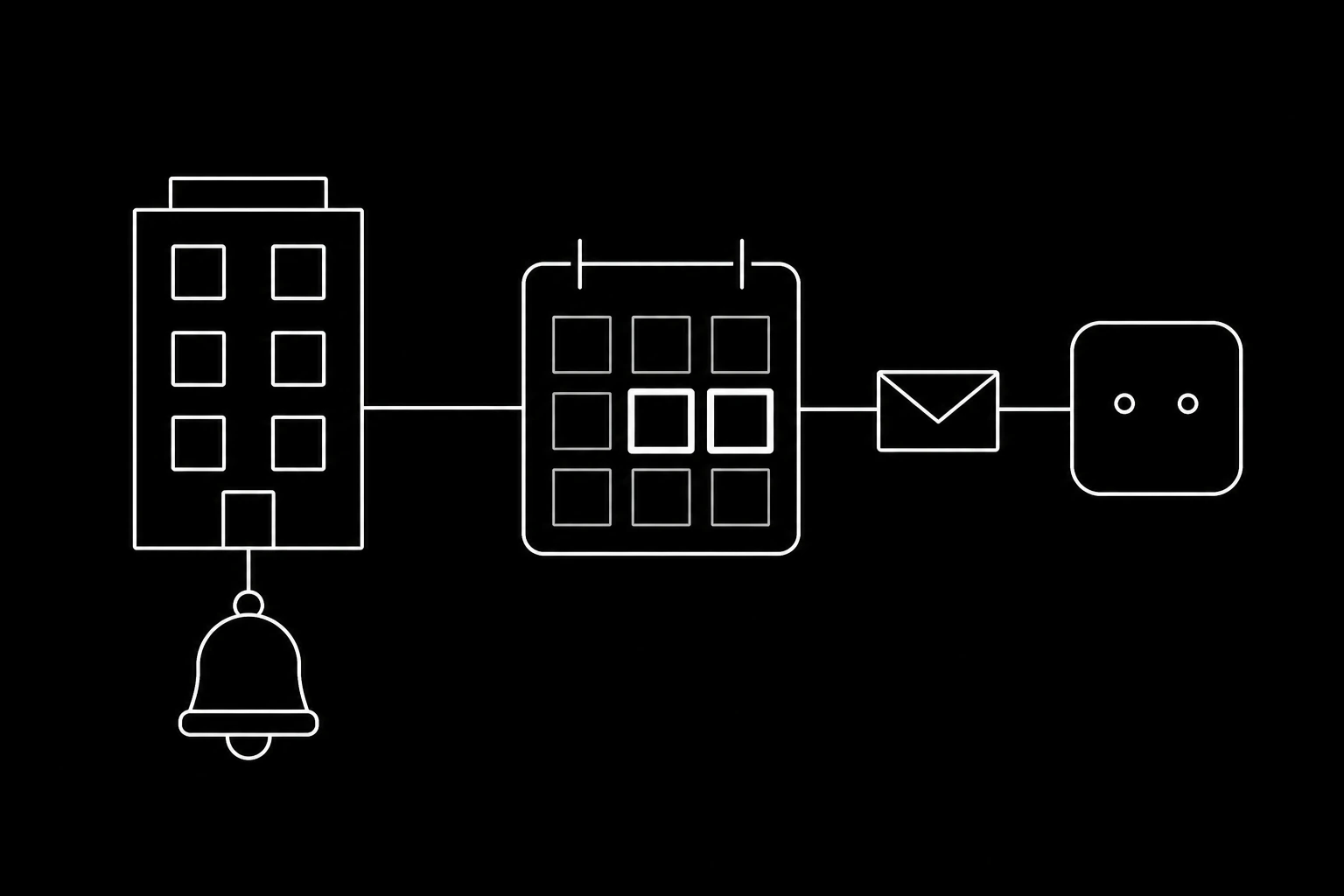
The questions, and where the answers live
Almost every enquiry is answerable from two systems you already run.
From the property management system: availability for those dates, the rate, what the room includes, whether the booking can be changed, and what the cancellation terms are.
From your own written information: parking, breakfast times, check-in and check-out, pets, cots, accessibility of a specific room, distance from the station, whether the pool is open in October.
The second list is where teams lose the most time, because the answers exist on the website and nobody reads websites before emailing. An agent that answers them instantly, correctly, and in the guest's language is doing work that is currently interrupting someone at the desk, per answering email in the language it arrived in.
Never quote availability you have not checked
The rule that matters commercially. Availability and rates change continuously, and an agent answering from anything other than live data will eventually confirm a room that is gone, which is a worse guest experience than a slow reply.
Read at answer time, every time. If the system is unreachable, say so and offer a call rather than guessing, per the grounding discipline in making an agent answer only what it can prove.
| Request | Agent | Desk |
|---|---|---|
| Availability and standard rates | Yes, live | |
| Property information and directions | Yes | |
| Modifying a booking within policy | Yes | |
| Cancellations within policy | Yes, plainly | |
| Discounts, upgrades, or a rate exception | Always | |
| Groups, events, and long stays | Always | |
| Complaints, during or after a stay | Always, quickly | |
| Accessibility requirements | Record and confirm receipt | Confirm what is possible |
Accessibility deserves the same handling as everywhere else: acknowledge immediately, record precisely, and let a person confirm what the property can actually do. Being wrong about a step-free room is a memory a guest keeps.
The pre-arrival window is the underused one
Most properties send a confirmation and then nothing until arrival. The days before a stay are when guests have questions, and answering them well is both service and revenue.
A short pre-arrival message that states the practical details and invites a reply produces exactly the conversations you want: arrival times, parking, dietary requirements, and occasionally a request for something you can sell. That conversation belongs in the same thread as the confirmation, so the guest's reply lands with context, per appointment reminders that can handle the reply.

Channels, and the mess they bring
Bookings arrive through your own site, through agencies, and through aggregators, and each has its own address, its own forwarding format, and sometimes a masked guest address. Three consequences.
Parse the forwarded structure rather than treating the sender as the guest. Reply where the guest will actually receive it, which for masked addresses means replying within the channel's thread. And deduplicate, because one enquiry can generate two notifications, which is the same idempotency problem as anywhere, per what happens when forty messages arrive at once.
Seasonality is the operational fact
Hospitality volume is not steady, and the peak arrives when staffing is thinnest. That makes the burst mechanics non-optional, and it makes the out-of-hours case the strongest argument for the whole project: enquiries at 22:00 in high season are the ones currently going unanswered until morning, by which time they have booked elsewhere.
Start with out-of-hours only, which is low risk and immediately measurable, per putting an agent on an inbox that already has traffic.
Questions
- Can an AI agent handle hotel booking enquiries?
- Yes, for availability, rates, property information, and modifications within policy, all read live from your property management system. Discounts, groups, and complaints stay with the desk.
- What must it never do?
- Quote availability or a rate it has not just checked, agree a discount or upgrade, or confirm an accessibility arrangement without a person verifying it.
- How does it handle enquiries from booking channels?
- By parsing the forwarded structure rather than treating the channel as the guest, replying where the guest will actually receive it, and deduplicating repeat notifications.
- What is the most underused message?
- A pre-arrival note that states the practical details and invites a reply. It moves the questions off the front desk and into a thread with context.
- Where should we start?
- Out of hours, where enquiries currently wait until morning and guests book elsewhere. Low risk, and the benefit is visible within a week.
- What about complaints?
- A person, quickly, during or after a stay. An agent handling a complaint competently still reads as being processed, which is the opposite of what a guest needs.
Give your agent an address it can answer from.
Create an inbox