Dedicated sending IPs, and why most agents should not want one
Somewhere around the point a deliverability problem appears, someone suggests a dedicated IP. It sounds like the serious option, and below a certain volume it makes things worse rather than better. Here is what an IP actually buys, and what almost everyone should do instead.
4 min read
What reputation is made of now
Mailbox providers weigh domain reputation heavily and IP reputation less than they used to, because domains are what senders actually are: an IP can be rented, a domain has history. For a conversational agent sending from an authenticated subdomain, the domain is doing nearly all the work, which is why SPF, DKIM, and DMARC and the warmup plan matter more than any infrastructure choice.
That shift is what makes the dedicated IP question less exciting than it used to be. It is still real, it is just no longer the first lever.
Shared, and why it usually wins
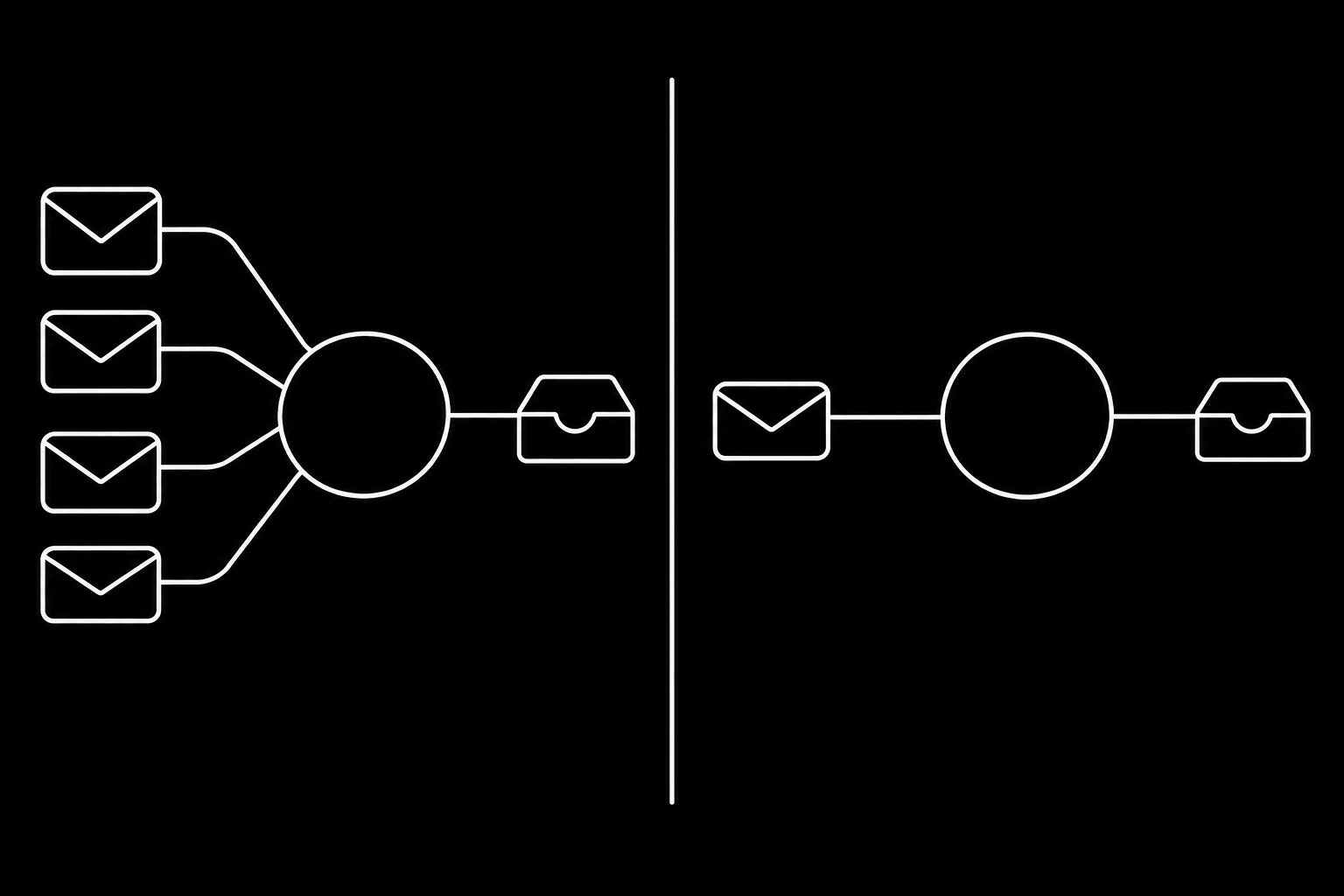
On a shared pool your mail leaves from addresses used by many senders, which sounds alarming and is mostly an advantage.
The pool is already warm. Volume from many senders keeps the IPs in constant use, which is the state providers trust. A new dedicated IP has none of that, and you have to build it.
Volume smooths out. An agent sending forty messages a day contributes nothing to an IP's reputation on its own. Forty a day on a dedicated IP is not enough traffic to establish a reputation at all, so the IP stays permanently unproven.
The provider manages the pool. Bad senders get removed, complaint rates are watched, and the pool is maintained by people whose job that is.
The risk people worry about, a neighbour ruining your delivery, is real in badly-run pools and rare in well-run ones, precisely because the provider's whole business depends on the pool staying clean.
When a dedicated IP is genuinely right
Three conditions, and it is worth having all three rather than one.
Sustained volume. Enough consistent daily mail to establish and hold a reputation. The usual guidance is thousands a day, not hundreds, and the number that matters is the floor rather than the peak: an IP that goes quiet for a fortnight loses what it built.
Consistent sending shape. Steady, predictable traffic rather than bursts, which is a poor description of most agent workloads, per what happens when forty messages arrive at once.
A reason. Compliance requirements, a contractual commitment, or an isolation requirement of your own. Wanting more control is a preference, not a reason.
If you meet all three, dedicated IPs are part of the enterprise tier, alongside the residency and SLA questions covered in pricing and where the mail actually goes.
| Shared pool | Dedicated IP | |
|---|---|---|
| Warmup | Already warm | Weeks of careful ramping, yours to run |
| Low volume | Fine | Reputation never establishes |
| Bursty volume | Absorbed by the pool | Looks like a spike, every time |
| Neighbour risk | Small, managed | None |
| Who fixes a problem | The provider | You |
| Suits | Nearly every agent | Sustained high volume with a reason |

What to fix instead
When delivery is poor, the causes in order of likelihood are almost never the IP.
- Authentication or alignment. Check a real delivered message, not the DNS. This resolves most cases, per the header checker.
- A cold domain. No history is treated as suspicious, and the fix is a ramp rather than infrastructure.
- Bulk-shaped behaviour. Near-identical bodies across recipients, marketing furniture, tracking pixels, per do spam filters catch AI-written email.
- Address quality. Hard bounces and complaints from addresses that were guessed rather than earned, per bounces, complaints, and suppression.
- One provider disagreeing. Check per-provider rather than in aggregate before concluding anything.
Work down that list before considering an IP, because a dedicated IP will not fix a single item on it, and starting one while any of them is unresolved makes the problem harder to diagnose.
The subdomain is the lever you do have
The isolation people want from a dedicated IP is mostly available from a dedicated sending subdomain, which costs nothing. Agents on agents.yourcompany.com build their own reputation, separate from the mail your people send, so an agent having a bad week cannot take your invoices with it. Higher-risk outbound can have its own subdomain again, warmed separately.
That is the version of isolation worth having at agent volumes: cheap, reversible, and effective on the axis that actually carries weight.
Questions
- Do I need a dedicated IP for AI agent email?
- Almost certainly not. Domain reputation carries most of the weight, and at typical agent volumes a dedicated IP never accumulates enough traffic to establish a reputation.
- What volume justifies a dedicated IP?
- Sustained daily volume in the thousands, with a consistent shape rather than bursts, plus an actual reason such as a compliance or contractual requirement.
- Is a shared pool risky?
- Less than people expect in a well-run one, because the provider's business depends on keeping it clean. The bigger risk at low volume is a dedicated IP that never warms.
- Will a dedicated IP fix my deliverability problem?
- Not if the cause is authentication, a cold domain, bulk-shaped content, or bad addresses, which covers nearly all cases. It will make diagnosis harder.
- What gives me isolation without a dedicated IP?
- A dedicated sending subdomain. Agents build their own reputation there, separate from your team's mail, and it costs nothing.
- What happens if a dedicated IP goes quiet?
- It loses the reputation it built. Consistency matters more than peak volume, which is why bursty agent workloads suit shared pools.
Give your agent an address it can answer from.
Create an inbox