Transactional, marketing, conversational: which one is your agent sending
Email infrastructure has spent twenty years splitting into two lanes. Transactional mail is triggered by an action and expected. Marketing mail is broadcast and consented to. Agent mail is neither, and putting it in the wrong lane is a common early mistake with slow, confusing consequences.
4 min read
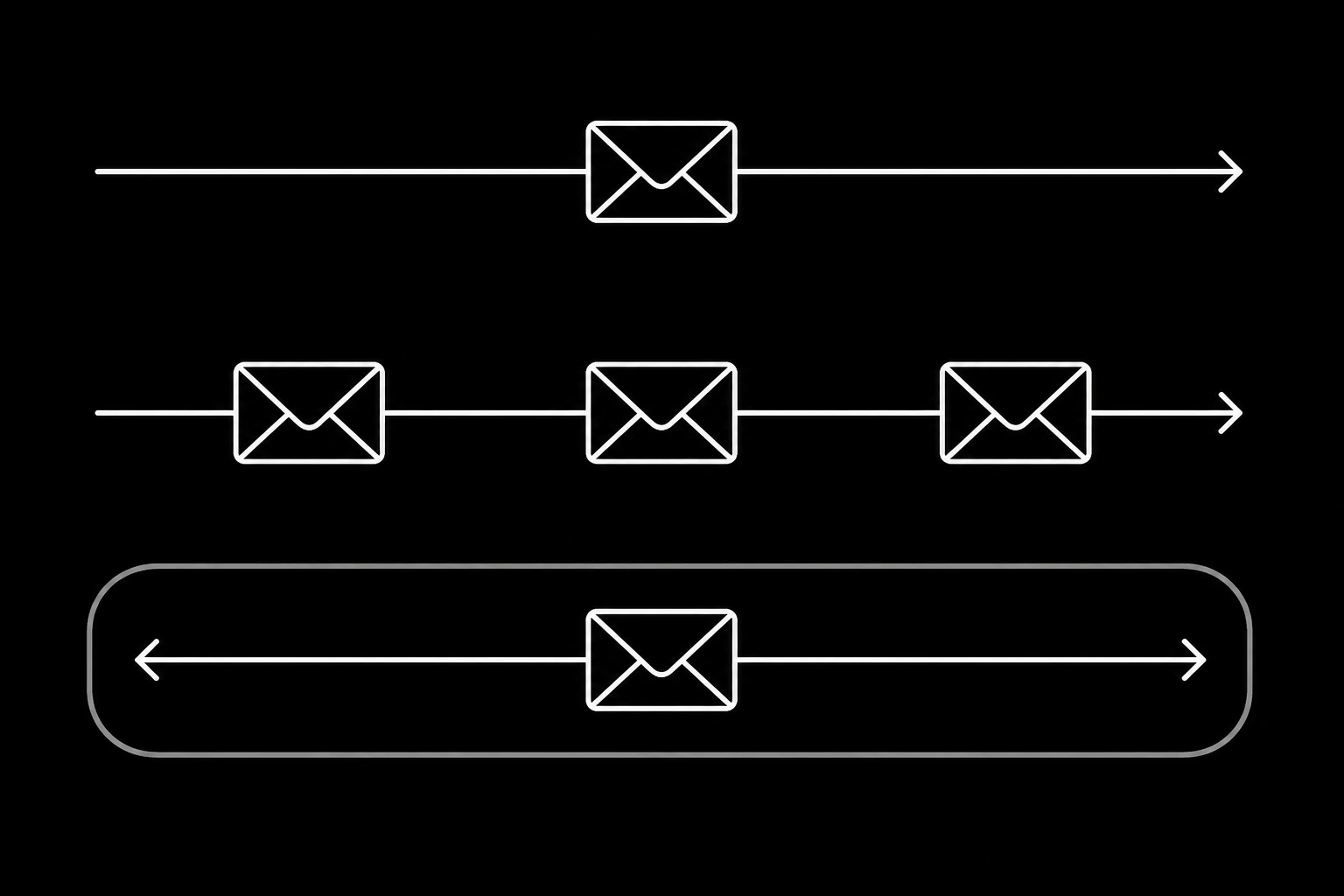
The three categories
| Transactional | Marketing | Conversational | |
|---|---|---|---|
| Triggered by | One user action | A campaign schedule | A message from a person |
| Recipients | One | Many | One |
| Expects a reply | No | No | Yes |
| Reply address | Often no-reply | A list manager | A real mailbox |
| Consent model | Implied by the action | Explicit opt-in | The conversation itself |
| Volume shape | Steady, event-driven | Spiky, campaign-driven | Bursty, business hours |
| Optimised for | Speed and reliability | Reach and reporting | Threading and context |
Agent mail is the third column and only the third. A support reply is not transactional, because a receipt does not expect an answer and this does. It is not marketing, because it goes to one person who wrote first.
What goes wrong in the wrong lane
On a campaign tool. Threading is an afterthought, because campaigns do not have conversations, so replies break into new threads or land in a mailbox nobody works. Sending is optimised for batches rather than a single message in seconds. And everything you send inherits the shape of bulk mail: templated structure, tracking by default, a footer built for compliance with marketing rules. That combination is exactly what spam filters react to.
On transactional infrastructure. Better, and still wrong in one important way: transactional systems assume nobody replies. Many default to a no-reply address, few give you a real inbox with searchable threads, and none give you contact memory. You end up building the receiving half yourself, which is the work described in agent inbox or shared mailbox.
Mixed together on one domain. The most expensive version. Marketing volume and complaint rates then sit on the same reputation as the mail your agent needs delivered, so a bad campaign takes your support replies down with it. Separate subdomains per traffic type is the fix, and it costs nothing, per deliverability for agent senders.
The reply is the distinguishing feature
Everything about conversational mail follows from expecting an answer.
The From address has to be a real mailbox somebody or something reads. The threading headers have to be right, or the reply arrives as an orphan, per how email threading works. The content has to be plain enough that a reply quoting it is readable. And you need somewhere for the reply to go that has context: the thread, the contact record, and your systems, per where each piece of an agent's state belongs.
None of that is optional infrastructure for an agent, and none of it is what a campaign tool is built to do.
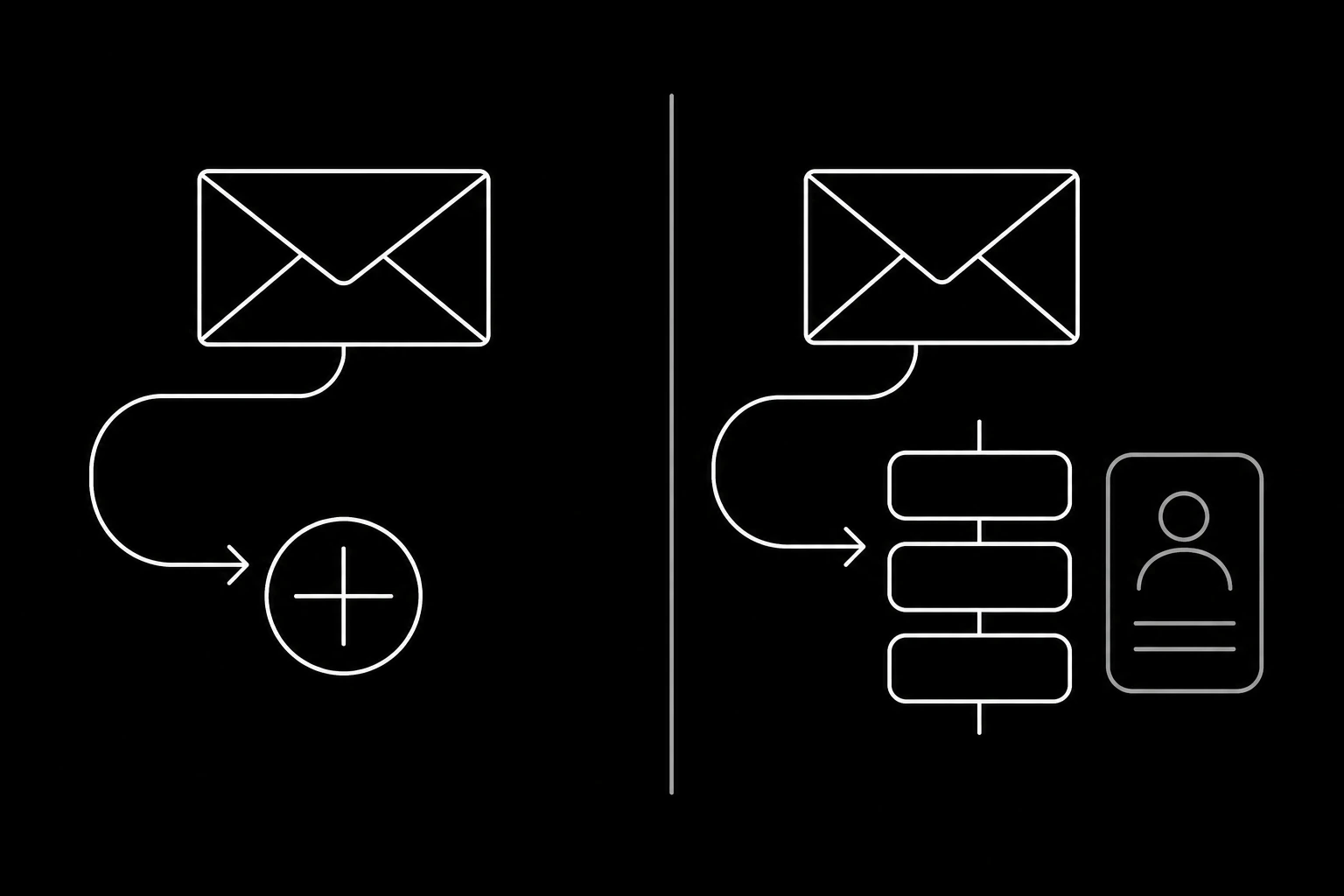
Where the categories blur, and what to do
Two genuinely ambiguous cases come up.
A transactional message that invites a reply. An order confirmation ending with "reply here if anything is wrong" is transactional in trigger and conversational in intent. Send it from the agent's address so the reply lands somewhere useful, and keep the content transactional: specific, plain, no marketing furniture.
An onboarding sequence. Scheduled like a campaign, personal like a conversation, and it works far better as the latter, per onboarding email that notices when someone is stuck. The test is whether a reply would be welcome and useful. If yes, it belongs on conversational infrastructure.
What this means for classification and limits
Sends are classified as a reply when the recipient wrote first in that thread, and as a cold send otherwise, which is a conversational distinction rather than a marketing one. Cold sends carry an unsubscribe link and are watched by duplicate-content and velocity tripwires, both of which exist because campaign-shaped behaviour is the failure mode to catch.
The recipient cap of five per message is the clearest statement of the boundary: conversational mail has a handful of recipients because conversations do. Anything needing more is a campaign, and campaigns belong on campaign infrastructure with its own domain and its own reputation.
Questions
- Is agent email transactional or marketing?
- Neither. It is conversational: triggered by a message from a person, sent to one recipient, and expecting a reply. That third category has different infrastructure requirements from either of the familiar two.
- Can I send agent mail through my campaign tool?
- You can, and threading, reply handling, and content shape will all work against you. Campaign tools are built for broadcasts nobody answers.
- What about transactional providers?
- Closer, but they assume nobody replies. You get sending without the receiving half, so you build inboxes, threading, and contact memory yourself.
- Should marketing and agent mail share a domain?
- No. Separate subdomains per traffic type, so a campaign's complaint rate cannot take your support replies down with it. It costs nothing to separate and a quarter to recover from not doing it.
- Where does an order confirmation that invites a reply belong?
- Send it from the agent's address so replies land somewhere with context, and keep the content transactional: specific, plain, and without marketing furniture.
- Why is the recipient cap five?
- Because conversations have a handful of participants. Anything needing more is a campaign, which belongs on campaign infrastructure with its own domain and reputation.
Give your agent an address it can answer from.
Create an inbox